
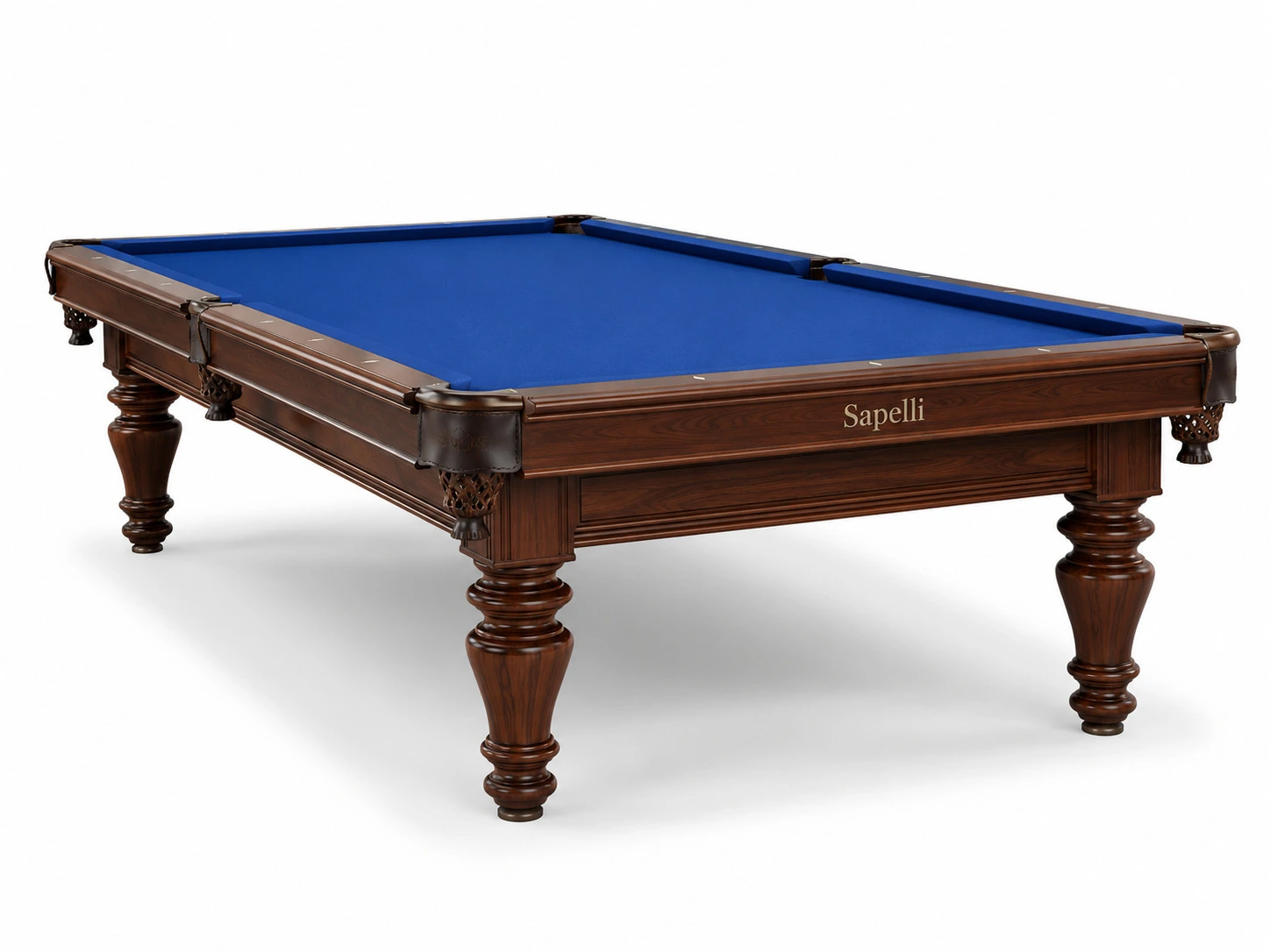
How bespoke, luxury and architectural billiard tables are designed
A manufacturer guide that brings solid wood, metal structure, playing discipline, interior language and personalisation into one project.
Last updated: 2026-07-26
Design starts with the room
A bespoke table is not defined by body shape alone. Clear room dimensions, circulation, lighting, floor load, furniture language and cue length are assessed together so the table becomes an integrated architectural element.
Solid wood and structural engineering
Solid wood provides visual value, while the frame, legs and joints keep the heavy playing bed stable. Species, moisture balance, grain, drying and finish are selected together with structural requirements.
Responsible personalisation
Colour, veneer, cloth, metal details, pockets and legs can be personalised, but cushion height, pocket geometry, bed flatness and frame support must remain technically correct.
Project file and lead time
A bespoke order should define materials, dimensions, colour approval, visual references, price scope and delivery method. Lead time varies with complexity, craftsmanship, timber supply, drying and finishing.
Manufacturer note
Every room, table and service requirement is different. Final dimensions, materials, prices and application decisions should be based on verified technical information or a site survey.
Frequently asked questions
What determines the price of a bespoke billiard table?
Price is shaped by dimensions, discipline, frame and bed, solid wood, finish, craftsmanship, metal details, cloth, pockets, delivery and installation.
Can colour and dimensions be customised for an architectural project?
Yes. Feasibility is confirmed against playing standards, structure, access routes and cue clearance before a technical file is approved.
Related guides
 Sapelli Zanaatkârlığı
How Sapelli manages solid wood selection and craftsmanship
From grain, moisture and stability selection to master craftsmanship, patina and finishing.
 Buying Guide
Where to buy a billiard table and how to choose a manufacturer
A purchasing checklist that evaluates frame, playing bed, cushions, service, warranty, installation and manufacturer responsibility beyond price.
Architectural ProjectsBilliard tables for hotels, villas, residences and architectural projects
Coordinate dimensions, materials, lighting, floor, delivery and bespoke production with architects in one project file.